
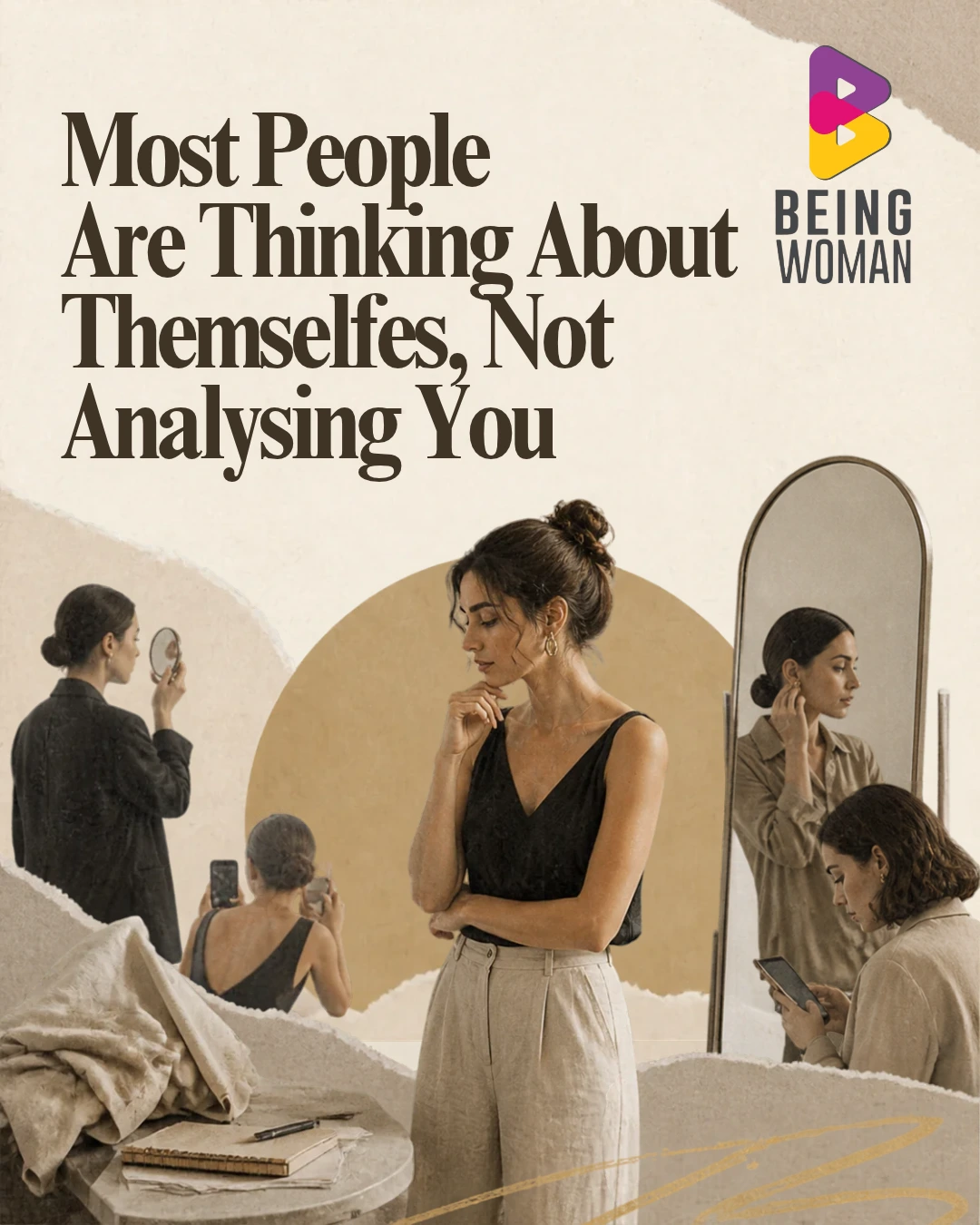
Have you ever changed your outfit three times because you couldn’t stop wondering what people would think?
Or rehearsed something you’re about to say, imagining all the ways it could go wrong?
I’ve been there.
When I was younger and had just started modelling, I constantly worried about how people would perceive me.
Before a scene or a photoshoot, I’d wonder what people would think of me. Would they like what they saw? Would they judge me? Would I look good enough?
Looking back, I realise how much of that anxiety came from my own imagination.
I was spending so much time anticipating other people’s reactions that I was allowing those imagined reactions to influence how I showed up.
I was responding to judgments that hadn’t even happened.
And I didn’t realise, at the time, that I could learn to relate to those thoughts differently.
The audience in your head
Here’s something I’ve come to understand: we often overestimate how much attention other people pay to us.
I notice this even in everyday situations today.
Sometimes, when I’m going somewhere important, I can spend far too much time thinking about what I should wear.
Should I wear jeans and a T-shirt? Should I wear a saree? Which outfit will make the right impression?
And then I realise how much time I’ve devoted to a decision that might have very little bearing on the outcome of the occasion.
Whether I wear jeans and a T-shirt or a saree, what ultimately matters is the value I bring to that room.
Psychologists call one aspect of this the spotlight effect—our tendency to believe that other people notice our appearance, actions and mistakes more than they actually do.
Think about it.
When you walk into a room, you’re probably conscious of how you look, what you’re wearing and how you’re coming across.
But the person sitting across from you might be worrying about their own appearance.
Someone else might be thinking about a deadline, a conversation they had earlier, or what they’re going to eat when they get home.
They’re occupied with their own lives, just as you are occupied with yours.
Of course, people sometimes notice us. They form opinions, make judgments and remember things about us.
But there’s a difference between acknowledging that possibility and behaving as though everyone is constantly evaluating you.
And when you behave as such, it can begin to influence your decisions.
You hesitate to speak up. You avoid opportunities. You spend an unreasonable amount of time trying to look right, sound right and do everything right.
All because you’re trying to manage an audience whose reactions you cannot fully know or control.
What if you stopped trying to manage everyone’s opinion of you?
You cannot control what everyone thinks of you.
You cannot guarantee that everyone will like you, understand you or approve of your choices.
And trying to achieve that kind of certainty can take up an extraordinary amount of your life.
What you can influence is how much power you give those imagined judgments.
And the more of your attention you give to the value you bring, the less you have to spend imagining the judgments you might receive.
You don’t need to be invisible to other people’s opinions. You just need to stop making them the centre of your life.
Until next time,
– Chhavi ❤️
If you are going through any kind of trouble in life, if you feel like you need someone to talk to but are too shy to speak up, use this anonymous feature to send me a message.