
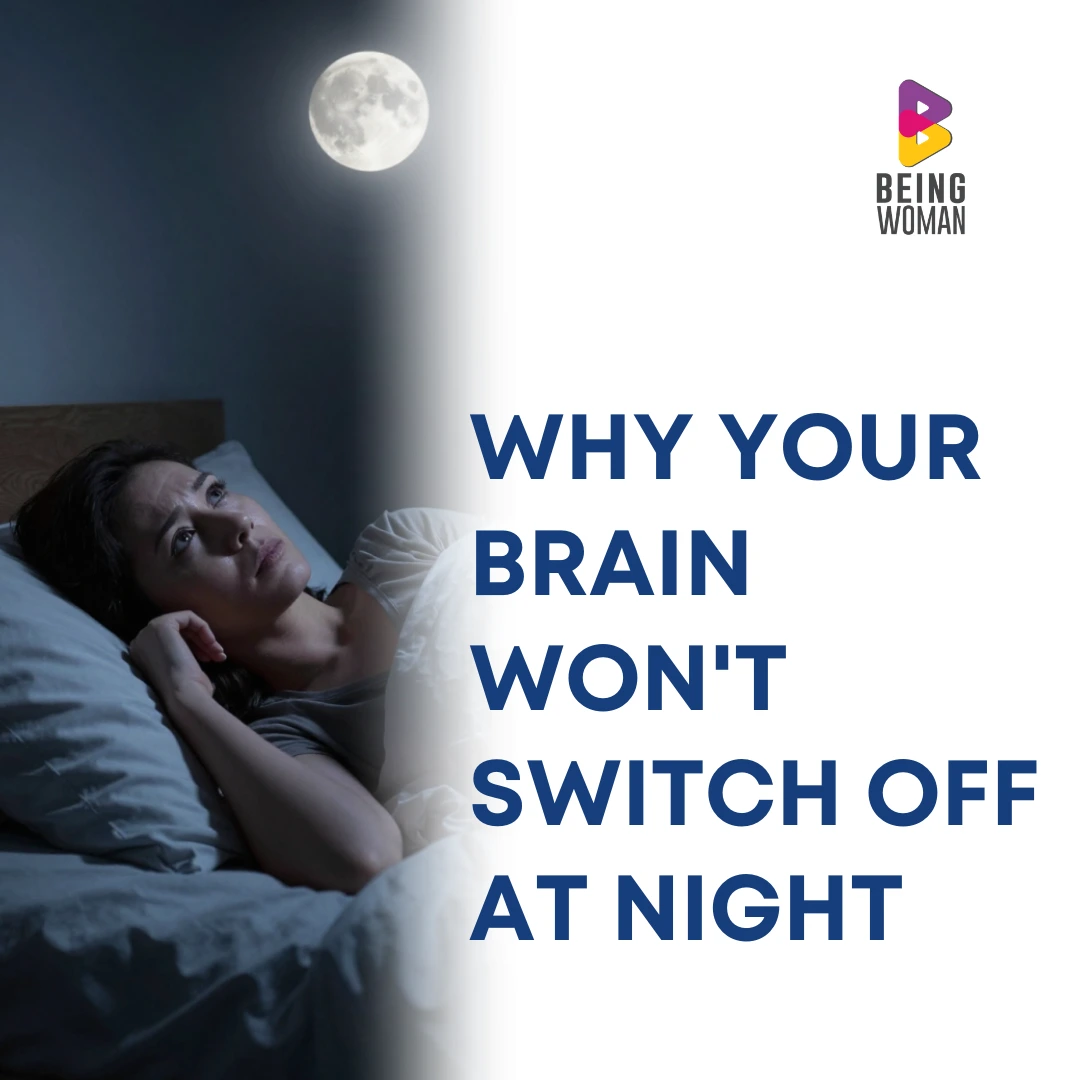
THE SCIENCE BEHIND THIS…
You finally crawl into bed.
The dishes are done. The emails are answered. The children are asleep. Your body is exhausted.
And then…
Your brain decides it’s the perfect time to replay that awkward conversation from three years ago.
Or remind you about the doctor’s appointment you forgot to book.
Or mentally redesign the kitchen.
Sound familiar?
If you’ve ever wondered why your mind suddenly becomes hyperactive the moment your head hits the pillow, you’re not imagining it—and you’re certainly not alone.
The dishes are done. The emails are answered. The children are asleep. Your body is exhausted.
And then…
Your brain decides it’s the perfect time to replay that awkward conversation from three years ago.
Or remind you about the doctor’s appointment you forgot to book.
Or mentally redesign the kitchen.
Sound familiar?
If you’ve ever wondered why your mind suddenly becomes hyperactive the moment your head hits the pillow, you’re not imagining it—and you’re certainly not alone.
What’s actually happening?
Your brain has spent the entire day in “doing mode.”
Every email answered.
Every meal planned.
Every decision made.
Every emotional need anticipated.
During the day, external demands keep your attention occupied. But when the world finally becomes quiet, your brain suddenly has room to process everything it postponed.
Think of it like closing dozens of browser tabs all at once. They don’t disappear just because you ignored them.
The biology
Your brain has a network called the Default Mode Network (DMN).
This network becomes more active when you’re resting or not focused on a task.
Its job isn’t to help you sleep.
Its job is to review, predict, reflect, plan and connect memories.
That’s why bedtime often feels like a board meeting your brain scheduled without asking you.
For many women, this effect is amplified because they’re carrying what’s known as the mental load – the invisible work of remembering, anticipating and organising life.
The grocery list.
The birthday gift.
The school forms.
Your mother’s medication.
Your partner’s dentist appointment.
The work presentation.
None of these thoughts disappear just because it’s 10 p.m.
Why women often experience it more intensely
Research suggests women are more likely to engage in rumination – repetitive thinking about problems, conversations and future scenarios.
This isn’t because we women are “overthinkers.”
It’s because many women are conditioned to be planners, caretakers and emotional managers.
Your brain isn’t broken.
It’s doing exactly what it’s learned keeps everyone else safe and cared for.
The problem is that your nervous system rarely gets permission to clock off.
So what helps?
Instead of trying to “stop thinking” (which almost never works), give your brain somewhere else to put those thoughts.
Try a simple “brain download.”
Spend five minutes before bed writing:
You’re simply telling your brain,
“You don’t have to keep holding this tonight.”
- Everything you still need to do.
- Everything you’re worried about.
- Anything your brain keeps replaying.
You’re simply telling your brain,
“You don’t have to keep holding this tonight.”
One thing to remember
A busy mind isn’t always a sign of anxiety.
Sometimes it’s simply a sign you’ve been carrying too much for too long.
Sleep doesn’t begin when your head touches the pillow.
It begins when your brain believes it’s finally safe to stop working.
This week’s reflection
If your mind had permission to stop managing everyone else’s lives for one evening, what would it choose to think about instead? Comment below.
If you are going through any kind of trouble in life, if you feel like you need someone to talk to but are too shy to speak up, use this anonymous feature to send me a message.