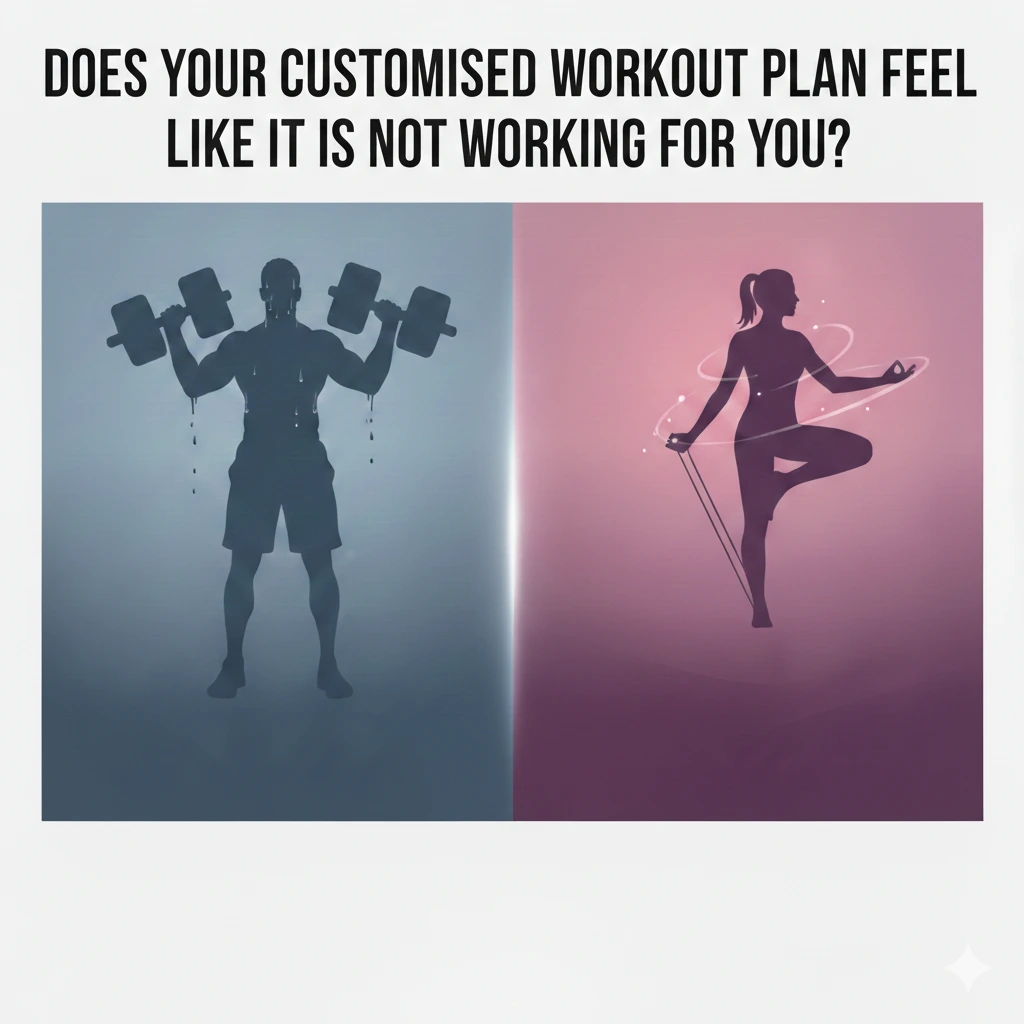
Have you ever looked at the “bespoke” fitness plans written for you and wondered why they feel like they were written for someone else?
Because they were.
For decades, the fitness industry has operated on a “one size fits all” model—and usually, that “one size” is a 25-year-old male. But as women, our bodies don’t just function differently; they operate on an entirely different biological clock.
The “Invisibles” in Women’s Fitness:
1. The Hormonal Rollercoaster
Men operate on a 24-hour testosterone cycle—it’s predictable and steady. Women, however, navigate a 28-day (or longer) infradian rhythm.
- The Reality: There are weeks in your cycle where your body is primed for heavy lifting and high intensity, and other weeks where your progesterone levels make you more prone to injury and fatigue. If you "push through" a HIIT session when your body is screaming for restorative movement, you aren't building muscle—you’re spiking cortisol and inviting burnout.
2. The Postpartum Architecture
Whether you gave birth six months ago or sixteen years ago, a mother’s body is structurally different.
- The Reality: From the widening of the hips to the stretching of the abdominal wall (Diastasis Recti) and changes in pelvic floor health, "getting back in shape" isn't about fitting into old jeans. It’s about rehabilitating your core and spine to support a new center of gravity. Traditional crunches or heavy squats without proper guidance can often do more harm than good for a mother's body.
3. The Rapid Decline (Bone and Muscle)
Biology gives men a head start with higher bone density and muscle mass. As women age—especially as we approach perimenopause and menopause—estrogen drops, and our bone density and muscle mass begin to decrease far more rapidly than our male counterparts.
- The Reality: We aren't just training for aesthetics; we are training for survival. We need specific resistance training protocols that stimulate bone growth and preserve lean muscle to prevent osteoporosis and metabolic slowdown later in life.
What women need to know about strength training – UCHealth Today
“We lose both at a higher rate because as soon as women stop menstruating, it’s a huge nose dive in terms of bone density and muscle mass through the loss of …
4. The Lifestyle & Stress Tax
We cannot separate the gym from the home. Women generally carry a heavier “mental load”—the invisible labor of managing a household, domestic demands, and emotional caretaking—all while navigating different sleep patterns often interrupted by kids or hormonal shifts.
- The Reality: Stress is physiological. If you’ve had a night of fragmented sleep and a morning of high-stress multitasking, a grueling "no-pain-no-gain" workout acts as a secondary stressor, not a release. Women need a fitness approach that integrates recovery and mental wellness as much as physical exertion.
For a long time, I looked for a space that understood these nuances. A space that didn’t just tell me to “push harder” when my hormones said “rest,” or “lift more” without considering my bone health or my history as a survivor.
I couldn’t find it. So, I’m building it.
I am so thrilled to give you a sneak peek into iBelieve Fitness and Wellness. This isn’t just another gym or app. It’s a women-centric ecosystem designed specifically for our physiology, our challenges, and our triumphs.
We are launching very soon, and I want to build this community with women who are tired of the “standard” and ready for the “specialized.”
The question is: Will you join me?
Comment with a “YES” if you’re ready to stop exercising like a man and start training like the powerhouse woman you are.
With love and strength,
Chhavi Mittal Founder, iBelieve Fitness and Wellness
If you are going through any kind of trouble in life, if you feel like you need someone to talk to but are too shy to speak up, use this anonymous feature to send me a message.